Education


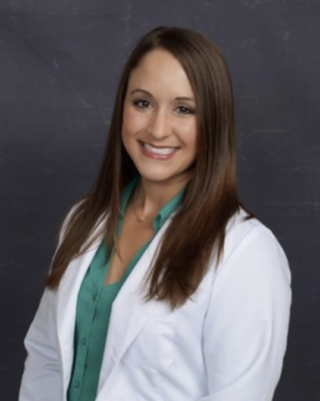
Dr. Kat Eye Society

Optometrist: Dr. Katherine Tran, O.D.
Practice: Eye Society, Houston, TX
Patient: 30 YO Female
Condition: Severe Dry Eye Disease

Presentation:
Patient presented with extreme dry eye and was previously advised against wearing contacts. She expressed a preference for contacts over glasses.

Ocular History:
The patient is a high myope with bilateral astigmatism. She can only count fingers without correction.
OS: -6.00 -1.00 x 031
OD: -6.25 -0.75 x 145

Vision: 20/400 OU

Prescribed lenses:
Standard GP Sphere in Optimum Infinite Blue, a hyper-Dk material, delivering 180 Dk, with Hydra-PEG surface treatment to optimize wettability and comfort.
Learn more here

Outcome:
OU BCVA: 20/20

The patient loved the lenses immediately! She was thrilled to experience clear vision and was excited that she could wear contacts. She comfortably wears her contacts for 10 hours a day, & her dry eye symptoms have improved.

Help More Patients in Your Area:
Find Eye Society on our Physician Locator page as a specialty contact lens practice. Is your practice on the map? Check here.


How to Order an InSight Scleral Lens

Our methodology is designed to simplify the fitting process and optimize your chair time. Provide us with your clinical observations, and we’ll handle the lens parameters.

Simply, place a diagnostic lens on the eye with sodium fluorescein (NaFl), evaluate the fit, and share your observations with our consultants. From there, we can design and deliver an initial lens within a few days.

Checklist for Simplified Ordering:

1. → Diagnostic Lens Selection

The initial diagnostic lens is selected based on the overall curvature of the cornea.

      • Steep/Ectatic Corneas: Start with the Prolate 5.000 SAG
      • Flatter/Oblate Corneas: Select the Oblate 4.500 SAG

2. → Evaluation

  • Central clearance: Aim for ~250 microns of clearance, represented by a 1:1 ratio. 250 microns of post-lens tear film and 250 microns of lens center thickness.
  • Limbal clearance: Ensure NaFl clears the limbus 360° with 50–80 microns of peripheral clearance. Look for any areas of bearing or blanching; the limbus should always be vaulted.
  • Landing zone / edge alignment: The lens should sit comfortably on the conjunctiva. Check for signs of impingement or blood vessel constriction.
  • Patient comfort: Note any lens awareness or discomfort.
    • Lens Awareness: If the patient feels the lens, it’s likely a landing issue.
    • Discomfort: If the lens is uncomfortable, remove it immediately. Scleral lenses should be very comfortable, when fit properly.
  • Quick Tip: After lens removal, check for staining and report it to consultation if present.

3. → Topography

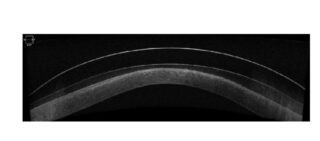
  • AS-OCT, if available

4. Sphere-Cylinder Over-Refraction:

The SCOR provides the most accurate visual acuity and avoids inducing astigmatism. The InSight Scleral Lens can incorporate up to +3.00 D of ADD power.

  • HVID (Horizontal Visible Iris Diameter): This measurement is essential for incorporating multi-focal optics, optimizing visual acuity and customizing the lens to the patient’s lifestyle.

5. → Relevant Patient Information

    • Previous contact lens wear
    • Ocular surgeries
    • Visual demands
    • Hydra-PEG consideration, if appropriate
      • Improves wettability by lowering the wetting angle
      • Reduces deposits and fogging

Your Metro Optics Team

Please call consultation with the above information to discuss further, and we will have the lenses to you in a few days.

If you don’t have all the information listed above, don’t worry! Our experienced consultants can design a lens based on the details you provide.

The more accurate information we receive, the faster we can get the final lens to you. We are here to support you every step of the way!

Do you have questions about fitting one of our lenses?
CONSULTATION: 800-223-1858
EMAIL: info@metro-optics.com

Sincerely,
Your Metro-Optics Team



Anterior Seg OCT
Practice: Illinois College of Optometry
Patient: 36 YO Male
Condition: Keratoconus

Presentation:
Patient was diagnosed with keratoconus when he was 26 years old. He was referred by his OMD for a contact lens fitting. He had never worn glasses or contacts. He reported difficulty driving at night and was concerned about getting his driver’s license renewed.

Ocular History:
His entering uncorrected acuities were 20/70 OD and 20/200 OS. Manifest refraction improved his vision to 20/30 OD and 20/70 OS. Slit lamp examination revealed corneal apical thinning and steepening, meibomian gland dysfunction, and 1+ conjunctival papillae OU.

Prescribed Lenses:
InSight scleral lenses
Learn More

Outcome:
20/20 OD
20/25 OS
Patient LOVES his lenses. He has been wearing the InSight Scleral lenses since 2017 and reports he will never wear anything else!

Help More Patients in Your Area:
Find the Illinois College of Optometry on our Physician Locator page as a specialty contact lens practice. Is your practice on the map? Check here.


Dr. Lechlitner

Optometrist: Stephanie Lechlitner, O.D.
Practice: Oak Hill Eye Care, Austin, Texas
Patient: 72 YO Female
Condition: Repeat Corneal transplant and repaired retinal detachment OD

Presentation:
Patient presented with high myopia OU. Irregular corneal surface OD due to corneal graft.

Ocular History:
The patient has been functioning with monocular vision for about 10 years. She experienced a failed corneal transplant and recently experienced a full retinal detachment OD.

Prescribed lenses:
InSight scleral in Optimum Extra 100Dk material with Hydra-PEG surface treatment.

                  Base Curve       Power       Diameter       SAG PC
OD             6.96                    -14.50       15.6                4.342 Toric
OS             6.78                    -8.50         15.6                4.393 Toric

Outcome:
OU VA 20/25
The patient is over the moon with how well these scleral lenses are working and is very grateful for this technology.

Learn more here

Help More Patients in Your Area:
Find Oak Hill Eye Care on our Physician Locator page as a specialty contact lens practice. Is your practice on the map? Check here.


Optometrist: Dr. Stephen Hakimi
Practice: Pasadena Eye Associates
Patient: 50 YO female
Condition: Unilateral Keratoconus

Ocular History:
The patient wore RGPs successfully for many years but began experiencing reduced vision and clarity in her left eye. She was highly sensitive to even minor prescription changes of 0.25 Diopters, which triggered associated symptoms such as headaches and stomach aches.

Treatment:
Dr. Hakimi fit her left eye in the ComfortKone Lens, FDA Cleared for the indication of Keratoconus.

Outcome:
The ComfortKone lens provided stable vision with improved clarity and comfort, helping her eyes work together alleviating her discomfort.
Learn more here

Help More Patients in Your Area:
Find Pasadena Eye Associates on our Physician Locator page as a specialty contact lens practice. Is your practice on the map? Check here.


ECP: Esmeralda De La Torres
Practice: Kelsey-Seybold Main Campus
Patient: 25 YO Female
Condition: Undiagnosed Keratoconus

Ocular History::
A 25-year-old female patient presented with 20/400 OD and 20/200 OS. She was able to see although everything was blurry. Her vision was better as as a young child and progressively deteriorated as she grew up to where she was counting fingers by age 25.

Treatment:
Once the patient was properly diagnosed with Keratoconus, Esme was able to successfully fit her in the FDA Cleared ComfortKone RGP Lens.
Learn more here

Outcome:
BCVA:
20/50 OD
20/40 OS

The patient cried in the chair when she was able to see clearly for the first time in her life. Her aunt said, “Next is your driver’s license!” The patient was overwhelmed with joy.

Help More Patients in Your Area:
Find Kelsey-Seybold on our Physician Locator page as a specialty contact lens practice. Is your practice on the map? Check here.


Dr. Arun Kaistha

Doctor: Dr. Arun Kaistha
Practice: Cooper River Eye Eye Associates, New Jersey
Patient: 15-year-old male
Condition: Undiagnosed Keratoconus

Background:
A 15-year-old male patient had been struggling with deteriorating vision for several years, visiting multiple doctors. Despite numerous consultations, the root cause of his vision issues remained unidentified, leaving the patient barely able to count fingers.

Treatment:
Upon visiting Dr. Kaistha, the patient was properly diagnosed with Keratoconus. The patient was fit in the InSight Scleral Lens.

Learn more here

Outcome:
VA of 20/20 with comfortable all day lens wear. The successful diagnosis and treatment significantly improved his vision and quality of life.

Help More Patients in Your Area:
Find Dr. Kaistha on our Physician Locator page as a specialty contact lens doctor. Is your practice on the map? Check here.


Proper contact lens hygiene plays a significant role for successful scleral lens outcomes. One study found that 66% of complications in contact lens wearers were due to poor hygiene.1 

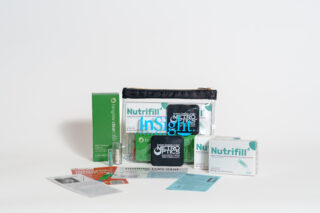
We offer a scleral lens care kit to improve compliance and overall lens performance. The care kit includes a ten day supply of the highest quality products and how to order more.

Care Kit Contents

  • Tangible Clean MPS 3.4 oz
  • Nutrifill Sterile Saline Insertion Solution with electrolytes
  • DMV Vented Scleral Cup for insertion
  • DMV Ultra Remover
  • Mirror
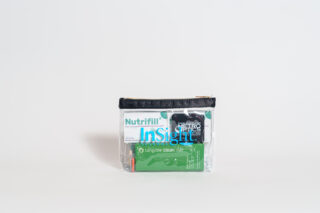
  • Clear travel bag
  • Tangible Clean 15% Discount Code
  • Care instructions

InSight Scleral Len Care Kit

Scleral Care Kit inside of clear travel bag

Autoship Option
Many of our accounts elect to automatically ship a scleral care kit with their scleral lens order. They incorporate the cost into their scleral lens fitting and materials fees. If you’re interested in the care kit auto ship option, please complete the form in the link below.

SCLERAL LENS AUTO SHIP REQUEST

Request Samples
If you’re interested in using these products in your practice, Tangible Science and Nutrifill offer samples to practitioners who open wholesale accounts.

Visit our Scleral Lens Success Guide to see the step by step instructions on how to request samples.

References
1. Dumbleton, K., Caffery, B., & Jones, L. (2020). Contact lens-related complications and the importance of compliance with lens care. PLOS ONE, 15(9), e0239116.


Are you looking to offer specialty contact lenses for patients who can’t achieve their best vision with glasses or daily contacts?

Metro Optics’ innovative portfolio enables eye care professionals to source high-quality custom contact lenses, ranging from  mild prescriptions to high-cylinder patients, and even the most hard-to-fit eye conditions.

6 Steps to Success

  1. Network: Spread the word about your services. Reach out to fellow physicians, other specialists, hospitals, and professionals locally and online. Get to know your business neighbors, ask if you can bring literature to their practice, and ask questions about their demographics. Talk to realtors, hair stylists, church members, pickleball league buddies, your child’s friends’ parents—everyone!
  2. Staff Education: Educate your staff with the abundance of free resources on YouTube, the GPLI webinars, and Scleral Lens education Society. Empower staff by getting familiar with ocular conditions, lens modalities, and billing. Schedule lunch and learns with your local reps to learn more about each company and their lens designs. Register your account in the Physician Portal to access Insertion and Removal video tutorials.
  3. Questionnaire: Ask your patients questions about their vision, comfort, dryness, and satisfaction with their current contacts. Often, patients won’t bring up issues unless prompted, assuming their vision is as good as it can be. The doctor can address their answers during the visit.
  4. Patient Education: Offer educational resources for your patients, such as concise one-page handouts that outline the benefits of custom contact lenses. Including information on their options, the proper care systems,  solutions and where to purchase them can enhance patient compliance and over all ocular health.
  5. Leverage Your Labs: Don’t hesitate to ask your labs questions. They are a valuable resource with insights and expertise. Each lab may offer different perspectives on lens modalities, designs and strategy. Let technology do the heavy lifting! Send images to your consultants at info@metro-optics.com to optimize the fitting session.
  6. Current content: Actively updating content on your website and social media profiles helps your ideal patient find your practice when they search online. If your website includes content that addresses their ocular condition, they will be more likely to schedule an appointment with you. Offer resources for them to connect with other people with their condition. For example https://nkcf.org for your Keratoconus patients.

When patients see that you genuinely care about providing the best possible vision rather than just settling for the status quo, they will trust and invest in you because you’ve invested in them. While some patients may be content with their current vision, others will be thrilled that you’ve given them a better option.

Education is powerful. By offering all available options to your patients, you enable them to make informed decisions, enhancing their overall experience and satisfaction.


Bilateral Keratoconus KeraSoft Thin

Patient:24 YO Male College Football Player
Condition: Bilateral Keratoconus

Ocular History:
Undetermined manifest refraction due to high corneal irregularity.

Treatment:
Due to high physical activity and poor GP lens tolerance, lens fit was converted to piggy-back system resulting in BCVA 20/50 OU.

Refit in Kerasoft OU with first fit parameters:
• OD BC 8.40, -4.75 -3.75 X 10, Diameter 15.0, Standard peripheral
• OS BC 8.20, -18.25, Diameter 15.0, Standard peripheral

LEARN MORE about KeraSoft
KeraSoft Diagnostic Fit Set

Outcome:
Dispense visit over-refraction:
• OD +1.25 -1.00 X 45 for 20/20 minus
• OS Plano for 20/20 minus

Remade OD with new lens power
-3.75 -4.50 X 65

Shortly following lens dispense, patient was recruited to a professional practice squad, relocated, and neglected follow-up.

Eight months post-dispense

  • Patient reaches out to report a drop in visual acuity.
  • The patient was instructed to report to the practitioner’s office at their earliest convenience for evaluation.
  • Upon evaluation, Kerasoft lenses exhibit excessive movement along with small over-refraction.
  • This decline in lens performance is due to lenses being used beyond their effective duty cycle.
  • The patient is informed that Kerasoft lenses must be replaced at a recommended 3-month interval.
  • The lenses can perform adequately for up to 6 months, but material degradation will result in poor performance beyond that time.
  • New Kerasoft lenses were ordered in the original parameters and in multi-packs.
  • Original dispense lens performance was restored by the new lenses and the patient was scheduled for routine follow-up.

Help More Patients in Your Area:
We want to make it easy for patients to find your practice. Is your practice listed on the map? Check the Physician Locator Page.


All rights reserved. | Quality Terms & Conditions